2026-10-24 ·
Protecting Your Chimney From Summer Thunderstorms in Murphy
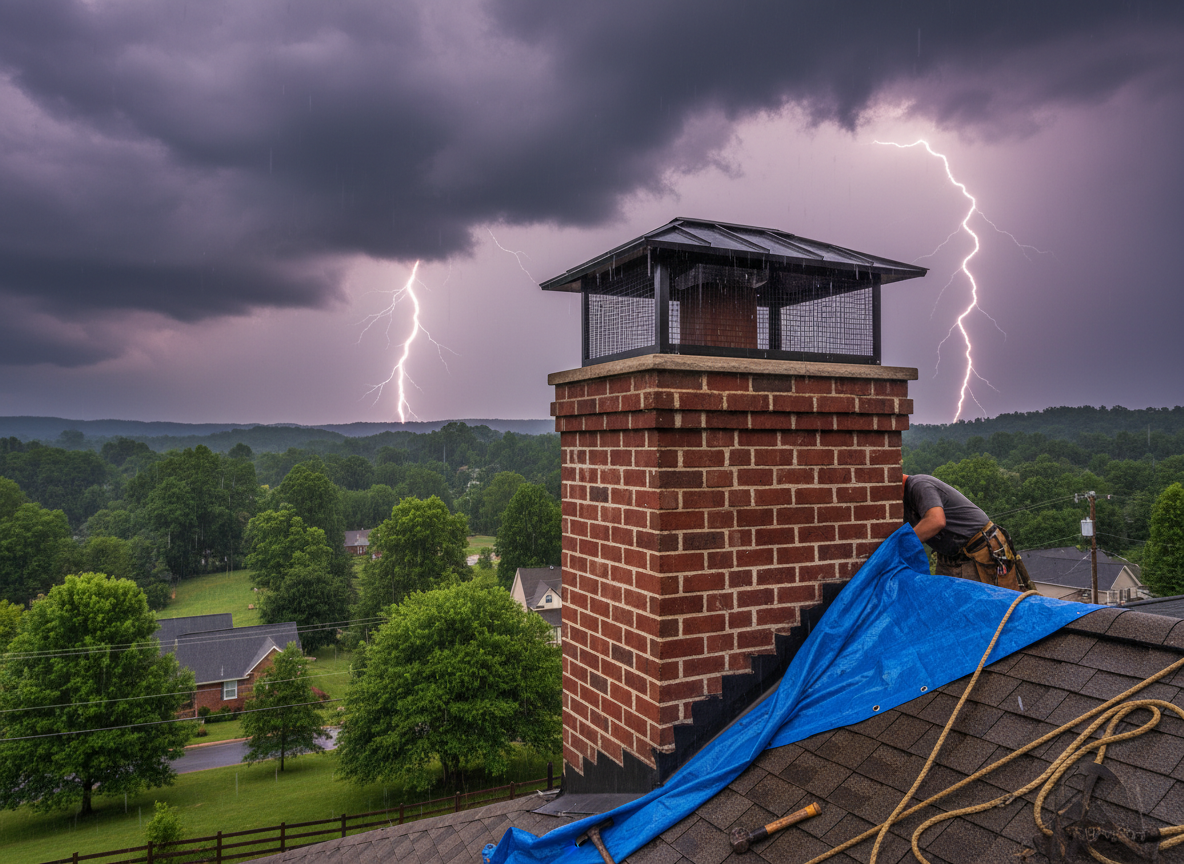
Murphy summer thunderstorms deliver heavy rain and wind that quickly expose weaknesses in chimney crowns, flashing, and mortar joints on homes throughout Breeze Hill, Rolling Ridge, and The Pavilions. The direct protection comes from inspecting these components before storm season peaks and applying targeted waterproofing to keep water from penetrating the structure during the frequent downpours that hit Collin County.
Storm Patterns That Affect Local Chimneys
Murphy sits in Collin County where hot humid summers produce severe thunderstorms with wind gusts that drive rain sideways into every seam on a chimney. Homes built in the 1990s and early 2000s in Rolling Ridge and Breeze Hill often feature brick chimneys with standard mortar that absorbs moisture during these events. Once water enters the crown or flashing, it travels down the flue and can stain ceilings or damage attic insulation within a single storm. The mild winters that follow do little to dry out the trapped moisture, allowing small cracks to widen by the next summer season. Residents near Breckinridge Park and Murphy Central Park report the same pattern after back-to-back storms that drop several inches of rain in a few hours.
Waterproofing the Crown and Joints
A waterproofing treatment applied to the crown and all mortar joints creates a barrier that repels the heavy rain common in Murphy summers. The product must penetrate the brick and mortar without sealing in moisture already present, which is why application timing matters—ideally on a dry day before the next front arrives. In neighborhoods like The Pavilions, where trees can funnel wind and rain directly at chimneys, the treatment needs to cover every horizontal surface and the top 12 inches of the flue. This step reduces the chance of interior leaks that later require chimney waterproofing or more extensive masonry work. Reapplication every three to five years maintains protection through repeated storm cycles.
Checking Caps and Flashing After Wind Events
High winds during Collin County thunderstorms can loosen or crack chimney caps and dislodge flashing where the chimney meets the roof. A quick visual check from the ground after each major storm reveals bent metal or gaps that allow water entry. On homes in Rolling Ridge, the flashing often sits under roof shingles that shift during gusts, creating hidden entry points. Replacing a damaged cap or resealing flashing prevents water from reaching the liner and interior walls. When damage appears high on the structure or involves the roofline, homeowners in nearby Plano and Wylie use the same approach to avoid larger repairs later.
Post-Storm Inspection Steps
Begin with a ground-level look at the crown for new cracks or missing pieces, then scan the flashing line for lifted edges. Next, check the interior fireplace for water stains or damp smell after the storm passes. If any sign of moisture appears, schedule a full inspection rather than waiting for the next event. Document the date and storm details so patterns become clear over multiple seasons. This routine takes less than 15 minutes and catches issues while they remain small.
Professional Help When Storms Cause Damage
When leaks appear inside the home or visible crown damage exceeds simple cracks, contact a local team that offers 24/7 chimney repair and chimney cap repair. Technicians familiar with Murphy housing stock know how the area's humidity affects mortar cure times and which sealants hold up through repeated Collin County storms. For cost context, review What Chimney Repair Typically Costs in Collin County and Why Murphy Homes Need Chimney Caps for Birds and Squirrels to understand typical ranges. Reach the crew at 120 E Farm To Market 544, Murphy, TX 75094 any hour for storm-related issues.