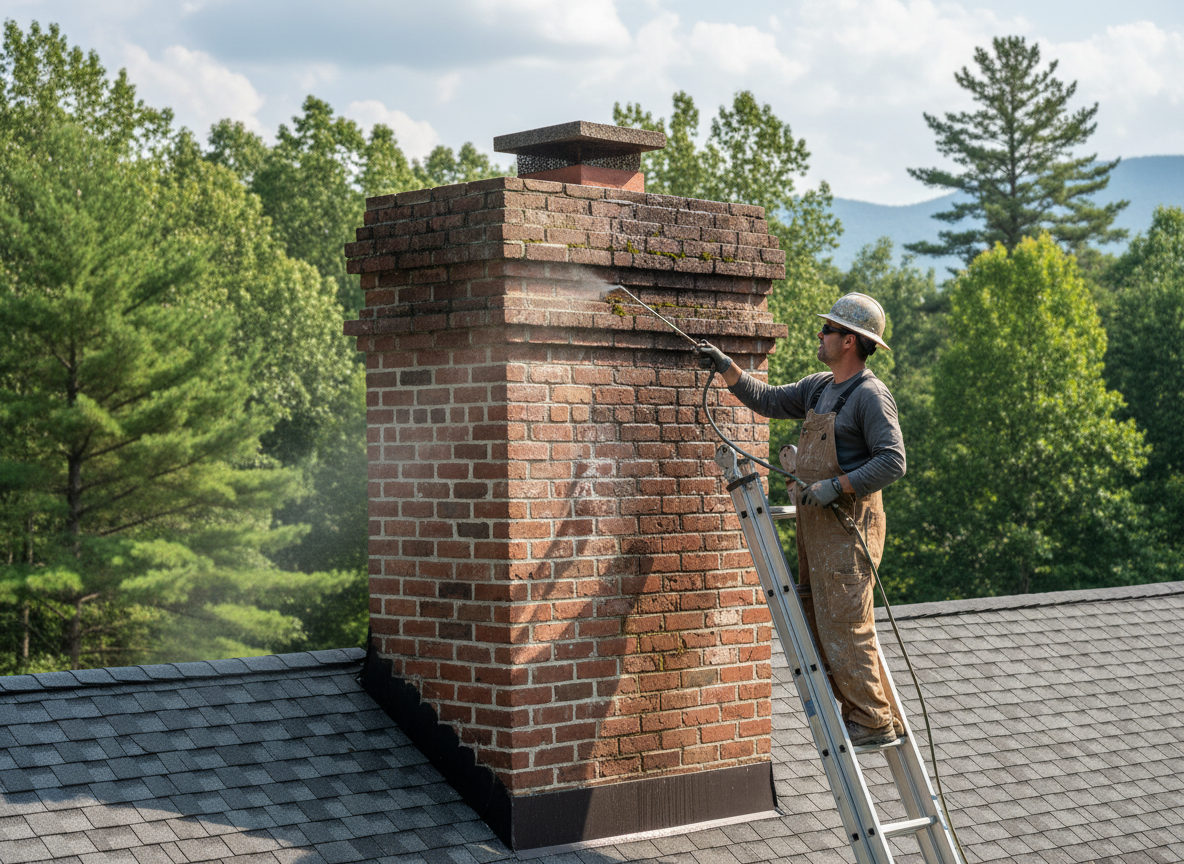
Murphy sits in Collin County with housing stock from the 1990s onward in neighborhoods such as Breeze Hill, Rolling Ridge, and The Pavilions. These homes often feature masonry chimneys exposed to repeated cycles of heavy summer humidity and sudden thunderstorms that drive water deep into mortar joints and flue liners. Standard exterior sealers fail quickly here because the heat and moisture create expansion and contraction that opens micro-cracks within a single season.
Effective waterproofing starts with a full inspection of crown, flashing, and chimney chase condition before any coating is applied. In Murphy we see frequent edge cases where roof valleys near Breckinridge Park direct runoff straight onto chimneys, or where nearby Plano and Richardson developments have altered drainage patterns that increase standing water at foundations. We use breathable masonry sealers rated for high humidity rather than film-forming products that trap moisture and accelerate spalling.
Homeowners in Wylie and Murphy sometimes confuse waterproofing with simple painting or caulking, yet those approaches trap vapor and force water deeper into the structure. Proper application requires dry surfaces, temperatures above 50 degrees, and multiple thin coats that penetrate rather than sit on top. After severe storms we routinely find failed sealers on south-facing chimneys that receive the most sun and rain exposure.
FlueCrisp Masters operates 24/7 from 120 E Farm To Market 544 in Murphy and schedules waterproofing before winter to prevent freeze-thaw damage even though winters here remain mild. The work includes protecting surrounding roofing and siding so no residue reaches the ground.
Technician insight
In Murphy the thing that catches most people out with chimney waterproofing is how our hot humid summers keep mortar damp for weeks after a storm, especially on chimneys in Rolling Ridge where tree cover slows drying. Homeowners apply the wrong sealer in fall and it never cures properly before the next rain.
Rolling Ridge Storm Leak
Heavy spring storms sent water through a cracked crown on a Rolling Ridge chimney. We found saturated flue liner joints and failing flashing. After cleaning and applying breathable sealer to the crown and sides, the leaks stopped and the homeowner avoided interior drywall repairs.
How it works
- 1
Initial Inspection
We examine the crown, flashing, mortar joints, and flue from the roof and attic to identify all water entry points specific to the home's exposure.
- 2
Surface Preparation
Loose mortar and old sealant are removed, surfaces are cleaned and allowed to dry completely before any product is applied.
- 3
Sealer Application
Breathable masonry sealer is applied in thin coats to the crown, sides, and flashing transitions, with extra attention to areas facing prevailing storm winds.
- 4
Final Check and Documentation
We verify coverage, photograph protected areas, and provide the homeowner with maintenance guidance for future storm seasons.
Pricing
Pricing depends on chimney height, access, and existing damage; we provide upfront quotes after inspection.