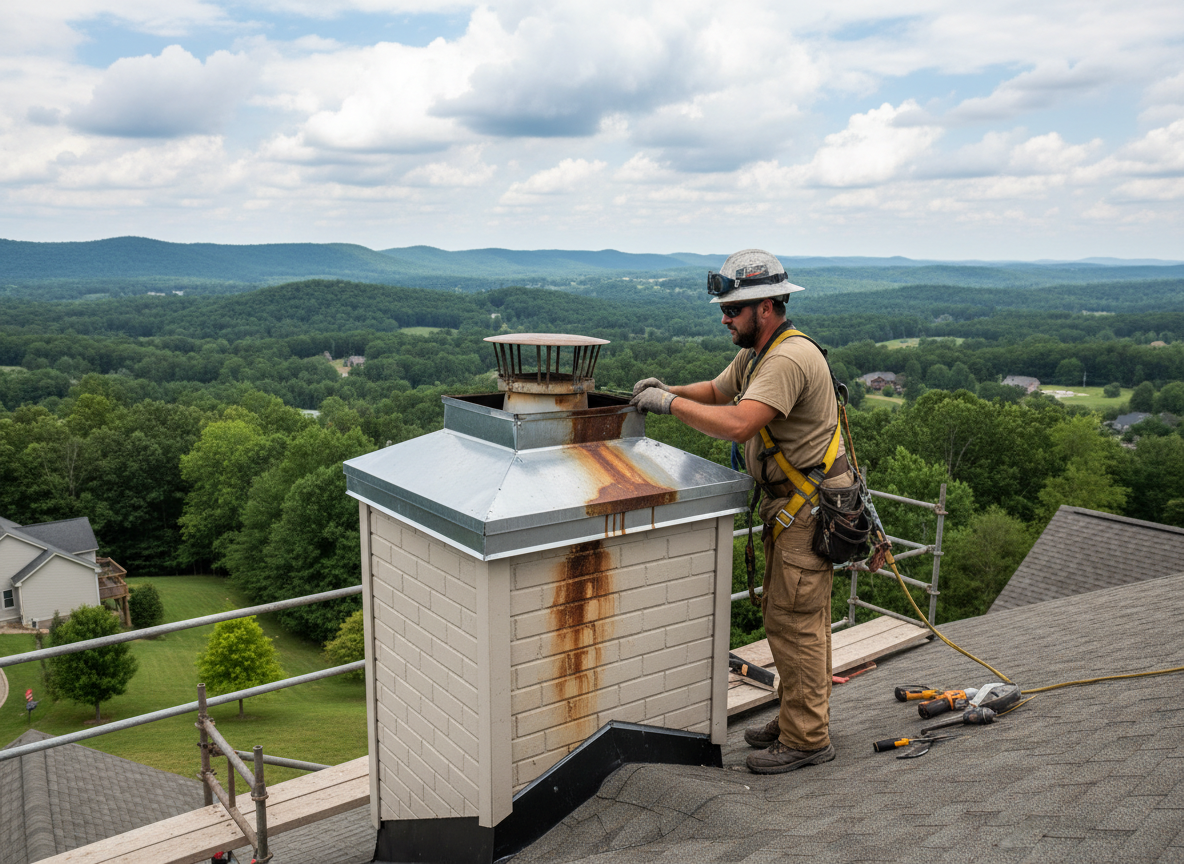
Murphy homes in neighborhoods like Breeze Hill and Rolling Ridge often feature prefabricated metal chimneys installed during suburban expansions. Hot humid summers accelerate corrosion on outer shells and inner liners while occasional severe storms drive water past failed flashings into attic spaces. Technicians at FlueCrisp Masters inspect for delaminated seams and rusted damper assemblies that allow carbon monoxide migration, especially after wind-driven rain events common near Breckinridge Park.
Prefabricated units differ from masonry because their thin steel walls expand and contract with Collin County temperature swings, loosening twist-lock joints over time. Mild winters still produce enough condensation inside the flue to pit stainless steel when combined with creosote acids. Repair work frequently requires section replacement rather than patching because manufacturers specify exact liner gauges that must match original listings to maintain UL listings and local building code acceptance.
Access challenges appear in The Pavilions and nearby Plano-adjacent streets where two-story roofs sit close to mature trees that drop debris during storms. Crews must stabilize the chase enclosure before removing damaged lengths to avoid disturbing surrounding shingles or siding. Upfront quotes follow a full camera scan from cleanout to cap so homeowners in Richardson and Wylie can see exactly which factory sections need swapping.
Proper sealing at the roof plane uses high-temperature silicone boots rated for the region’s humidity rather than standard mastic that fails within two seasons. Final testing includes a smoke draw check to confirm draft before the system returns to service.
Technician insight
In Murphy, the thing that catches most people out with prefabricated chimney repair is how quickly humidity from hot summers plus one severe storm pits the metal liner in homes built along Rolling Ridge. Homeowners often miss the small seam separation near the attic that lets water reach the insulation, and by the time they notice the smell it has already traveled into the chase.
Storm-Damaged Prefab Flue in Breeze Hill
After a line of severe thunderstorms, a homeowner noticed water stains on the ceiling near the fireplace. Inspection revealed separated twist-lock joints and rusted lower sections in the prefabricated chimney. Crew replaced two factory lengths, resealed the roof boot, and confirmed draft with a smoke test. The system passed inspection and no further moisture entered the home.
How it works
- 1
Initial Camera Inspection
Technician scopes the full length of the prefabricated flue to locate corrosion, separated joints, and water intrusion points.
- 2
Section Assessment
Crew identifies which factory lengths require replacement and confirms matching gauges and listings before ordering parts.
- 3
Targeted Component Swap
Damaged sections are removed and new UL-listed segments installed with proper twist-lock engagement and high-temperature sealant.
- 4
Leak And Draft Verification
Roof flashings are resealed, a smoke test confirms proper draft, and the system is returned to safe operation.
Pricing
Upfront quotes provided after on-site inspection; final cost depends on number of sections replaced and roof access difficulty.