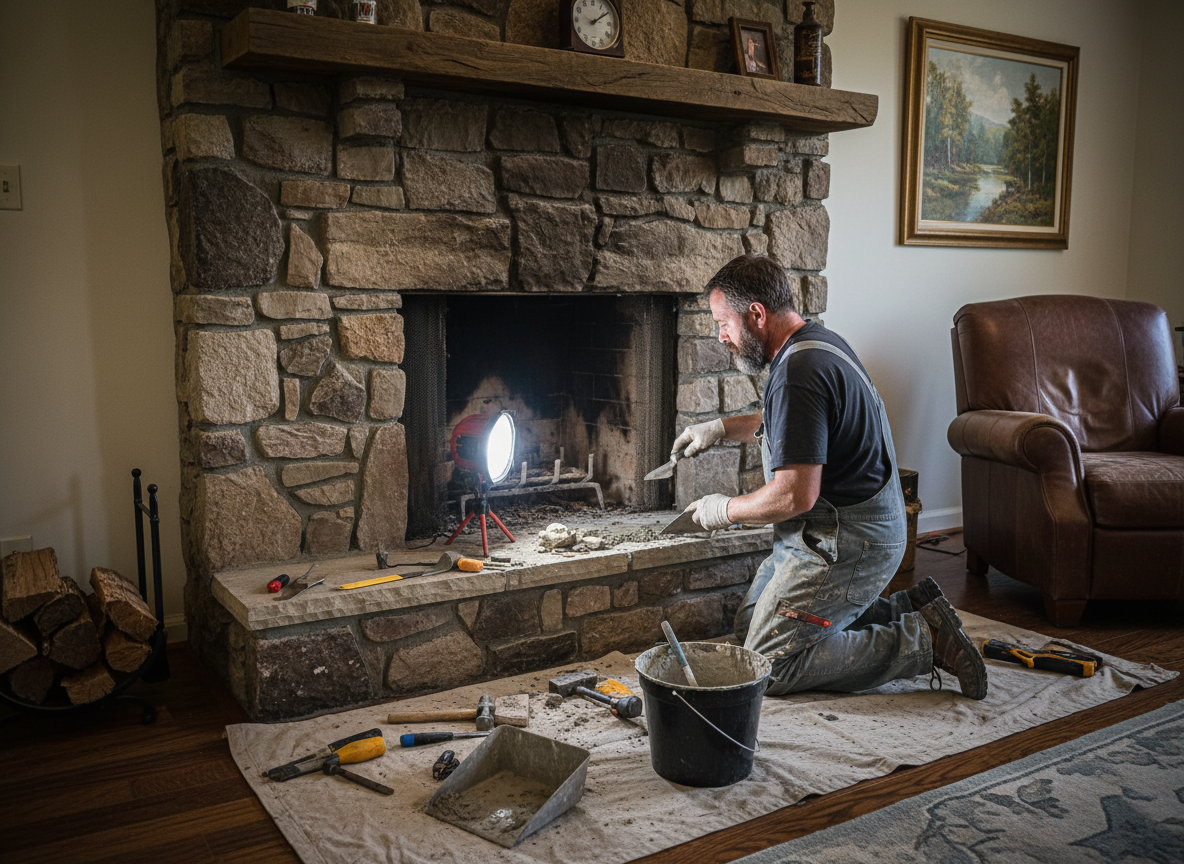
Murphy homes in neighborhoods like Breeze Hill and The Pavilions often feature masonry fireplaces installed during the 1990s and early 2000s building boom. Hot humid summers accelerate mortar joint deterioration while occasional severe storms drive water into flue liners and smoke chambers. Technicians at 120 E Farm To Market 544 respond to calls from Rolling Ridge residents reporting smoke spillage after heavy rain because saturated brick allows moisture to migrate into the firebox. Proper diagnosis requires checking both the visible firebox and hidden areas where water collects behind the damper.
Mild winters in Collin County mean fireplaces see less frequent use than in colder regions yet storm-driven debris and wind-driven rain still create cracks that worsen over time. When working on jobs near Breckinridge Park or Murphy Central Park we routinely find deteriorated refractory panels that must be replaced with material rated for the temperature swings common here. Homeowners in Plano and Richardson sometimes attempt DIY patch repairs using standard mortar that fails quickly under local humidity levels leading to repeated service calls.
Storm Season Preparation
Before severe weather arrives inspect the firebox for loose bricks and test the damper seal. In Murphy properties water intrusion during summer storms often starts at the crown and travels down the flue so addressing exterior masonry first prevents interior damage that shows up months later.
Common Materials and Edge Cases
We use high-temperature refractory cement and stainless steel liners sized for the flue dimensions found in local housing stock. Edge cases include homes where previous owners installed gas logs without updating the chimney cap leading to corrosion that only appears after several humid seasons.
Technician insight
In Murphy the thing that catches most people out with fireplace repair is how quickly summer humidity loosens mortar in 20-year-old homes along Rolling Ridge; a small crack after one storm season turns into major water intrusion by the next because mild winters keep the fireplace closed and the moisture trapped.
Rolling Ridge Fireplace Leak
Heavy spring storms sent water down a flue in a Breeze Hill home. Inspection revealed deteriorated crown and saturated refractory panels. We replaced the panels and repointed the exterior masonry. The fireplace now drafts cleanly with no smoke backdraft during test burns.
How it works
- 1
Initial Inspection
Arrive at the Murphy address and examine the firebox, damper, and flue for water damage or debris from recent storms.
- 2
Diagnosis and Quote
Identify the root cause such as cracked refractory or failed mortar joints and provide an upfront quote before any work begins.
- 3
Repair Execution
Replace damaged panels or repoint joints using materials suited to Collin County humidity and temperature cycles.
- 4
Final Testing
Verify draft performance and confirm no smoke spillage occurs under simulated operating conditions.
Pricing
Upfront quotes provided after on-site inspection with no hidden fees.