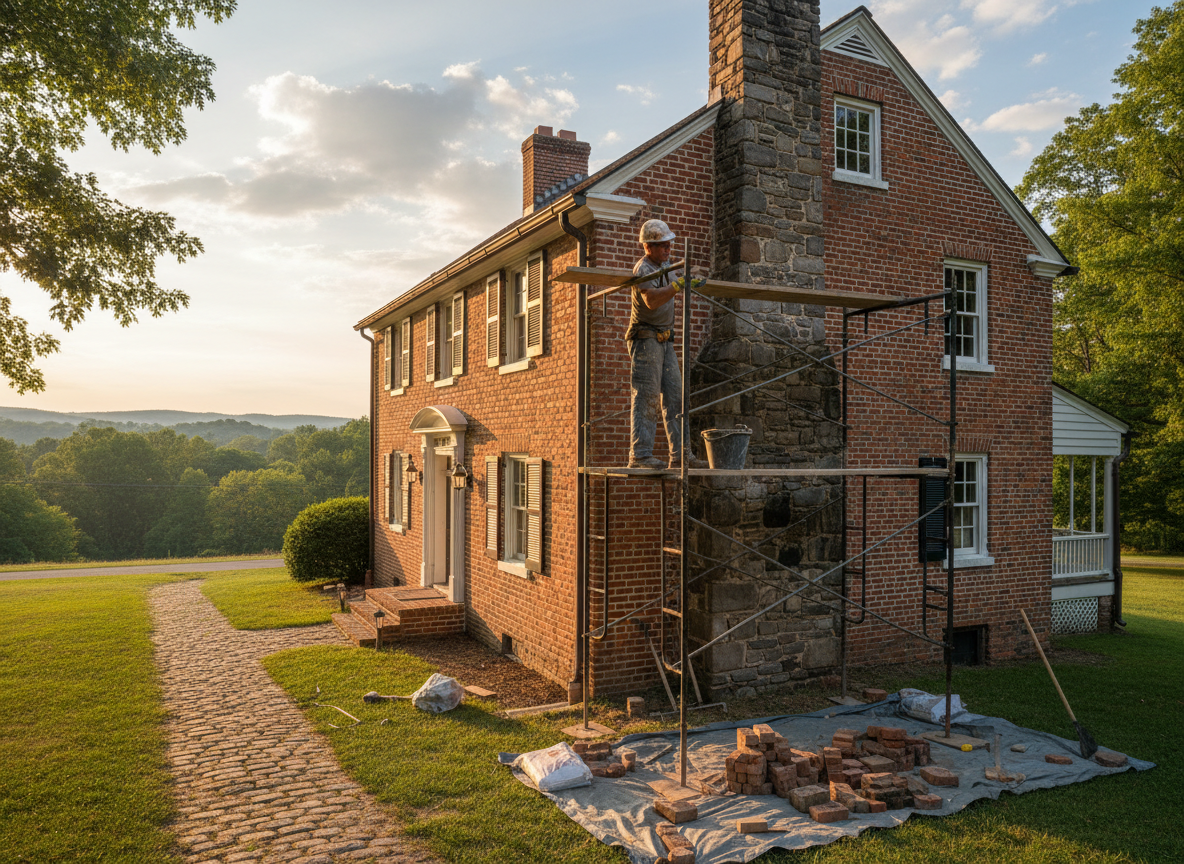
Murphy's housing stock from the late 1980s through early 2000s in neighborhoods such as Breeze Hill, Rolling Ridge, and The Pavilions commonly features brick chimneys tied to central fireplaces. Hot humid summers allow moisture to linger in mortar joints, and the occasional severe storms that cross Collin County push water deeper into the structure. Restoration work here frequently requires selective brick replacement and repointing with Type N or lime-rich mortars that match the original to avoid trapping additional moisture. Homes near Breckinridge Park sit on slightly higher ground but still see water intrusion at the crown and flashing when original sealants fail after repeated humidity cycles.
Flue liners in these chimneys often show hairline cracks from thermal expansion during mild winters followed by rapid cooling. When restoring, technicians must evaluate whether the clay or metal liner can be salvaged or needs full replacement to meet current venting standards for gas appliances common in Murphy. Work near Plano and Richardson borders sometimes involves coordinating with HOA guidelines on exterior brick appearance. Edge cases include chimneys that share walls with neighboring units in The Pavilions, where access is limited and vibration from removal can affect adjacent structures.
Water penetration through deteriorated crowns remains the leading cause of interior staining reported by owners in Wylie-adjacent sections of Murphy. Proper restoration includes rebuilding the crown with a slope that sheds water quickly and installing a stainless cap sized to the flue. Homeowners should expect the job to expose hidden damage once scaffolding is up, particularly on chimneys that have never been inspected since original construction.
Technician insight
In Murphy, the thing that catches most people out with chimney restoration is how our humid summers keep mortar joints saturated long enough for freeze-thaw cycles in mild winters to pop bricks on 1990s homes in Rolling Ridge before owners notice anything from the ground.
Rolling Ridge Chimney After Spring Storms
A homeowner in Rolling Ridge reported interior ceiling stains following a severe storm. Inspection revealed failed crown and cracked flue liner allowing water to track down the chimney chase. Damaged sections were removed, the flue was relined, and a new sloped crown with cap was installed. The leaks stopped and the chimney now sheds water effectively during humid periods.
How it works
- 1
Site Inspection
Examine chimney exterior, crown, flashing, and flue from top and bottom to map cracks, spalling, and water paths.
- 2
Damage Removal
Take out failed mortar, damaged brick, and compromised liner sections while protecting roof and landscaping.
- 3
Structural Repair
Rebuild with matching brick and mortar, replace or reline the flue, and correct any lean or separation from the roof.
- 4
Weatherproofing and Finish
Install new crown, cap, and flashing then apply breathable sealer suited to local humidity.
Pricing
Pricing is determined after on-site inspection because storm damage and hidden moisture vary widely between properties.