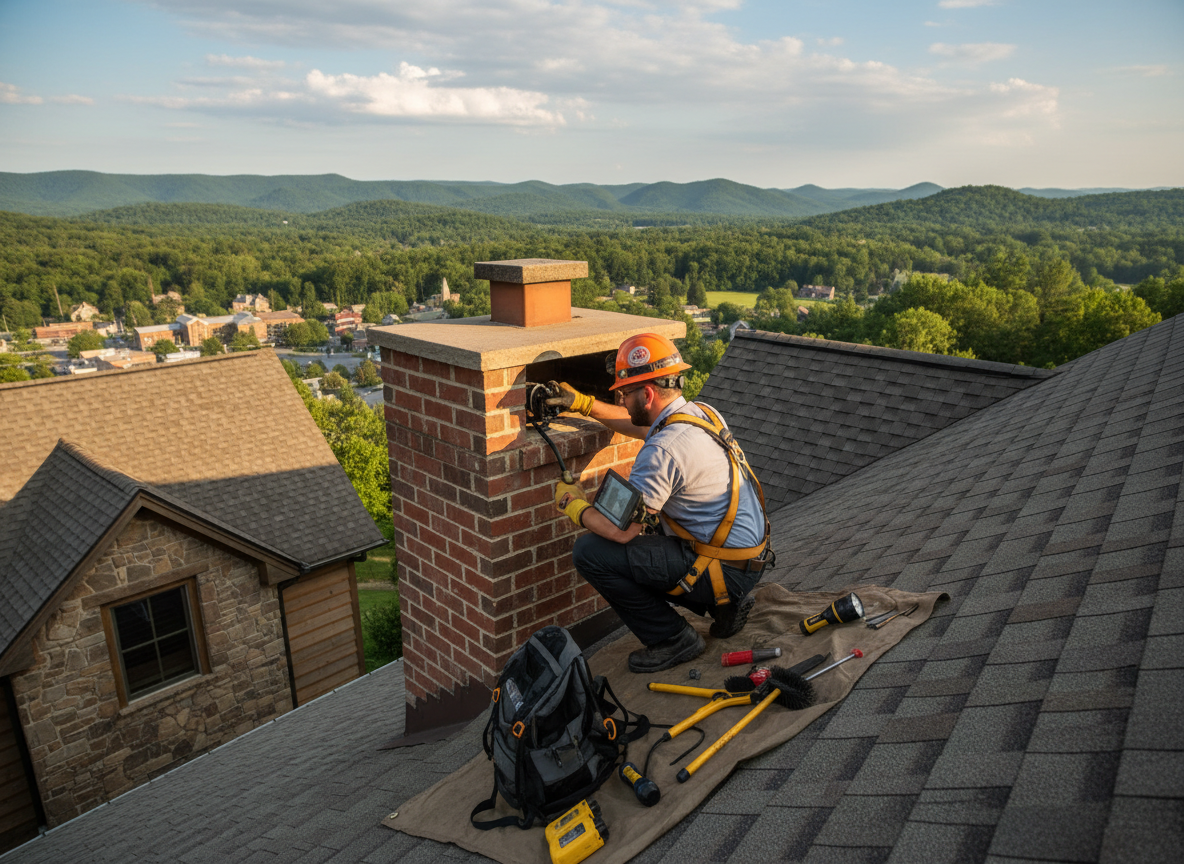
Murphy sits in Collin County with neighborhoods like Breeze Hill and Rolling Ridge filled with homes from the 1990s onward that often feature masonry chimneys tied into the original brickwork. Hot humid summers drive moisture through mortar joints while mild winters punctuated by severe storms can crack flue liners or dislodge caps. A proper inspection starts at the roofline, checking for water intrusion paths that later show up as creosote buildup or spalling inside the firebox.
Homeowners in nearby Plano, Richardson and Wylie frequently call after noticing white residue on the exterior brick or musty odors near the hearth. These signs point to failed flashing or deteriorated crown seals that allow rain to pool. Inspectors must also verify the damper operates freely and that the smoke chamber draws correctly, because the flat terrain here offers little natural draft help during calm, humid evenings.
Code requirements in Collin County call for clearance checks around the chimney chase and proper termination height above the roof. Skipping these steps leaves owners exposed when storms roll through and water finds its way into the attic insulation. Every inspection includes a camera sweep of the flue to document liner condition before any seasonal use begins.
Common Inspection Triggers
Homeowners in The Pavilions and along Murphy Road often request inspections after noticing draft issues following spring storms or when selling a property that has sat vacant through a humid summer. These calls reveal how quickly vegetation growth around the base can trap moisture against the foundation and accelerate deterioration of the lower flue sections.
Technician insight
In Murphy, the thing that catches most people out with chimney inspection service is how fast the humid summers push moisture behind the brick on 25-year-old homes in Breeze Hill. Once that happens the crown cracks from the inside out and you only find it during a camera inspection, not from the ground.
Storm-Damaged Crown in Rolling Ridge
After a severe spring storm a Rolling Ridge homeowner noticed water stains near the fireplace. The inspection revealed a cracked crown allowing water to pool inside the flue. We documented the damage with video, recommended crown repair and sealed the flashing to prevent further intrusion.
How it works
- 1
Exterior Assessment
Check roof termination, cap, crown and flashing for storm damage or sealant failure common after Collin County weather events.
- 2
Flue Camera Sweep
Run a camera through the entire flue to locate cracks, creosote or liner separation caused by repeated humidity cycles.
- 3
Firebox and Damper Check
Inspect masonry joints, damper operation and smoke chamber for proper draft in the mild winter conditions typical here.
- 4
Report and Recommendations
Provide written findings with photos and prioritized next steps based on access and observed conditions.
Pricing
Pricing depends on chimney height, access and condition; call 24/7 for an upfront quote.